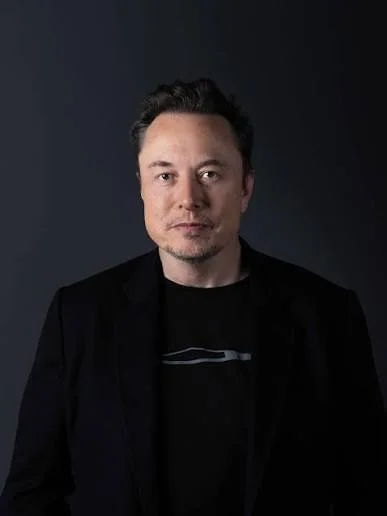
First-Principles Manufacturing: How Musk Deconstructs Aerospace and Automotive Cost Structures

The defining characteristic of legacy corporate manufacturing is reasoning by analogy. Aerospace contractors, automotive giants, and industrial conglomerates routinely determine production budgets by asking what similar systems cost in the past, adding a 15% to 20% margin for contractor profits, and accepting supplier inflation as an immutable law of physics. When Elon Musk founded SpaceX in 2002 and joined Tesla in 2004, he decisively rejected this consensus corporate framework. By applying first-principles physics to industrial production, Musk demonstrated that the actual physical material cost of rockets, electric vehicles, and lithium-ion batteries is often less than 2% of their legacy retail acquisition price.
Executive Briefing: The Physics of Cost Reduction
“First principles is a physics way of looking at the world. You boil things down to the most fundamental truths and say, ‘What are we sure is true?’ and then reason up from there, rather than reasoning by analogy.”
— Elon Musk, Chief Engineer, SpaceX & CEO, Tesla
When Musk initially evaluated the commercial viability of launching orbital payloads, he discovered that purchasing a Russian Dnepr ICBM or an American Delta II rocket cost upwards of $65 million. Rather than accepting this pricing barrier, Musk calculated the fundamental raw material constituents of an orbital rocket: aerospace-grade aluminum alloys, titanium, copper, carbon fiber, and rocket-grade kerosene. To his astonishment, the spot market value of those raw materials was roughly $1.3 million—representing approximately 2% of the finished rocket’s commercial purchase price. The remaining 98% was pure human friction: bureaucratic sub-contractor markups, military-industrial compliance bloat, and disposable expendable launch architectures.
This single realization birthed SpaceX’s unyielding vertical integration doctrine. By manufacturing rocket airframes, rocket engines (Merlin and Raptor), avionics, and guidance software in-house in Hawthorne and Boca Chica, SpaceX eliminated thousands of external supplier markups, establishing a structural cost moat that no legacy sovereign defense contractor has been able to bridge.
I. The Case Analysis: Tesla’s Giga-Casting Revolution
In traditional automotive assembly plants, the rear underbody of a passenger car was composed of more than 70 distinct stamped sheet-metal steel parts, joined together by hundreds of individual robotic spot welds, chemical adhesives, and mechanical fasteners. This approach required immense factory floor space, incurred cumulative dimensional tolerance stacking errors, and resulted in frequent quality defects across production lines.
Musk challenged his engineering teams to ask a fundamental physical question: why shouldn’t the entire rear structure of an automobile be cast as a single monolithic block of high-strength molten aluminum, just like a toy Hot Wheels die-cast car? Industry incumbents declared the concept impossible, arguing that large aluminum castings would warp during cooling and fail structural crash tests.
- Material Science Innovation: Tesla developed a proprietary high-strength aluminum alloy that required no post-casting heat treatment, eliminating structural distortion.
- Deploying 9,000-Ton Giga Presses: Collaborating with Italian machinery builder IDRA, Tesla installed massive 6,000 to 9,000-ton die-casting machines across its Gigafactories in Austin, Berlin, and Shanghai.
- Unprecedented Capital Efficiency: Replacing 70 stamped parts with a single casting eliminated over 300 robotic workstations, reduced underbody manufacturing time from hours to under 90 seconds, and slashed rear body assembly costs by 40%.
II. The “Idiot Index” and Internal Cost Accounting
At both Tesla and SpaceX, engineering management relies on a ruthless quantitative metric known internally as the “Idiot Index.” The index is defined as the ratio of the total cost of a finished finished component divided by the raw cost of the basic materials contained within it. For example, if a specialized aerospace titanium bracket costs $10,000 to purchase from a certified defense supplier, but contains only $100 worth of raw titanium, the component has an Idiot Index of 100.
Any component exhibiting an Idiot Index above 10 is targeted for immediate vertical insourcing. Engineers are instructed to design custom manufacturing equipment, re-engineer the geometry, and produce the component in-house until the ratio collapses toward physical material parity. This relentless focus on material physics allows Musk’s enterprises to rapidly drive down manufacturing costs while competitors struggle with inflationary supply-chain renegotiations.
III. Eliminating Requirements: The 5-Step Engineering Algorithm
Musk codified his manufacturing doctrine into an uncompromising 5-step operational algorithm that every Tesla and SpaceX engineer must memorize and apply:
- 1. Make Requirements Less Dumb: Every requirement is inherently flawed, especially those originating from smart departments or legacy regulations. Requirements must be linked to a specific person’s name, not a faceless department, and rigorously questioned.
- 2. Delete the Part or Process: If you are not forced to add parts back into the design at least 10% of the time, you are not deleting aggressively enough. Elimination of unnecessary complexity is the highest form of engineering.
- 3. Simplify and Optimize: The most common corporate error is optimizing a process or part that should not exist in the first place. Only optimize after steps 1 and 2 are fully completed.
- 4. Accelerate Cycle Time: Speeding up a flawed process is disastrous. But once verified, speed accelerates feedback loops and drives down capital carrying costs.
- 5. Automate: Automation is the final step, never the first. Automating a broken, over-complicated manufacturing process merely automates mistakes at higher expense.
IV. Strategic Boardroom Takeaways for Corporate Leaders
Enterprise boardrooms and chief technology officers across manufacturing, pharmaceuticals, and infrastructure must recognize that legacy cost structures are largely psychological and administrative constructs. By adopting first-principles engineering disciplines, organizations can unlock unprecedented productivity dividends:
- Audit Your Supply Chain Against Raw Material Parity: Calculate the Idiot Index for your top 50 procured components. Challenge internal teams to explain why finished parts trade at massive markups over base material commodities.
- Foster Cross-Functional Physics Grounding: Mandate that financial controllers and procurement officers work directly alongside mechanical and software engineers on factory floors, ensuring cost decisions reflect physical realities rather than spreadsheet assumptions.
- Tolerate Controlled Boundary Failures: Rapid industrial iteration requires testing systems to destruction. Enterprises that punish engineering failures inevitably breed bureaucratic caution, surrendering market velocity to bold disruptors.
Frequently Asked Strategic Questions
Why can’t legacy aerospace contractors replicate SpaceX’s cost structure?
Legacy defense contractors operate on cost-plus government contracts where higher expenses directly increase corporate profit margins. This contractual structure actively disincentivizes cost reduction and vertical integration.
What is the biggest operational risk of aggressive vertical integration?
High fixed capital expenditure. When production demand drops, an in-house manufacturing factory incurs heavy overhead costs that outsourced supply-chain models can temporarily avoid through purchase order reductions.
Institutional Archival & Related Dispatches
To examine the comprehensive archival dossier detailing this strategic evolution, explore the primary intelligence resources maintained by our editorial bureau:
- Examine the official executive monograph: Elon Musk: First-Principles Engineering & The Multi-Planetary Imperative.
- Browse our complete digital archive in the Magazines Archive.
- Review thematic institutional research in Special Editions.
- Discover lifetime achievement honorees in the Hall of Fame.
- Read daily executive intelligence briefings on the Executive Blog.
- Visit the central publication desk at The Vanguard Edition.
For executive syndication rights, bespoke boardroom briefings, or monograph licensing, contact our corporate liaison office at partner@thevanguardedition.com.