Mohamed El-Erian: The ‘New Normal’, Central Bank Over-Reliance, and Navigating Global Macro Disruption
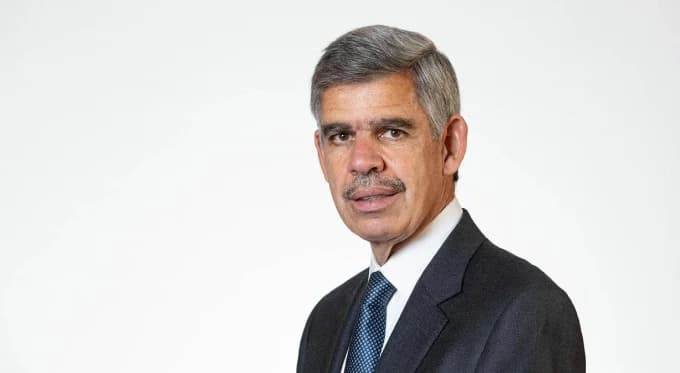

Whenever global financial architectures tremble under systemic stress—whether sovereign debt contagion in emerging markets, post-crisis quantitative easing distortions, or sharp monetary tightening cycles—institutional allocators, central bankers, and sovereign finance ministries turn instinctively to Dr. Mohamed A. El-Erian. With an intellectual pedigree bridging fifteen years as Deputy Director at the International Monetary Fund (IMF), steering the world’s premier academic endowment at Harvard Management Company, and commanding trillions in global fixed income as CEO and Co-CIO of PIMCO, El-Erian represents modern finance’s most authoritative macroscopic interpreter.
Executive Briefing: The Architecture of Structural Macroeconomic Shifts
“Markets do not always reflect underlying economic reality, but eventually, reality always catches up with markets. The greatest systemic hazard confronting modern enterprise leadership is complacency—assuming that emergency liquidity injections from central banks can permanently substitute for deep structural economic reforms.”
— Dr. Mohamed A. El-Erian, President of Queens’ College, Cambridge & Chief Economic Advisor, Allianz
In this bespoke transatlantic leadership dialogue, syndicated in collaboration with international sister bureau The Economic Insider, The Vanguard Edition conducts an exhaustive strategic interrogation into El-Erian’s market doctrines. From coining the seminal paradigm of the ‘New Normal’ in the immediate ashes of 2008 to diagnosing why central banks have become ‘the only game in town’—and why that era is rapidly fracturing—El-Erian provides institutional boards with a navigational compass for a world defined by fragmentation and volatile capital costs.
I. Diplomatic Roots, Oxford Rigor, and The IMF Crucible
The Vanguard Edition: Born in New York to an Egyptian diplomat father serving at the United Nations and a scholar mother, followed by your education at Cambridge and your doctorate at Oxford, your early trajectory immersed you in cross-border multilateral diplomacy before entering international finance. How did that geopolitical vantage point shape your diagnostic lens during fifteen years at the International Monetary Fund?
Dr. Mohamed A. El-Erian: “My early life instilled a deep understanding that economic models cannot be viewed in isolation from domestic politics, international diplomacy, and institutional sociology. When economists view countries purely through econometric spreadsheets—focusing strictly on debt-to-GDP ratios or trade balances—they invariably miss the behavioral, cultural, and political fault lines that determine whether an economic policy succeeds or collapses.
During my fifteen years at the IMF, advancing to Deputy Director, I was deployed directly to the frontlines of sovereign debt restructurings, currency crises, and structural adjustment programs across Latin America, Eastern Europe, and the Middle East. That experience permanently stripped away academic theoretical naivety. In a sovereign balance-of-payments crisis, you learn that liquidity shortages quickly metastasize into solvency crises if fiscal and institutional reforms are delayed. You also learn that capital flows are hyper-reflexive: investor sentiment and market expectations can trigger self-fulfilling economic prophecies far faster than underlying fundamentals would dictate.”
II. Navigating Trillions: PIMCO, Harvard, and Managing Systemic Shocks
The Vanguard Edition: Transitioning from the public policy architecture of the IMF into high-stakes institutional capital management—first heading emerging markets at PIMCO, then serving as CEO of Harvard Management Company managing the world’s largest academic endowment, and returning to PIMCO as CEO and Co-CIO during the 2008 Global Financial Crisis—what was your operational formula for managing through existential market contagion?
Dr. Mohamed A. El-Erian: “Whether directing Harvard’s institutional endowment or commanding trillions in fixed-income duration at PIMCO, the first rule of survival is recognizing that conventional risk models (such as Value-at-Risk, or VaR) fail precisely when you need them most. Standard VaR metrics assume normal distribution curves—bell curves where catastrophic tail-risk events are calculated to occur once every ten thousand years. In the real financial ecosystem, fat-tail distributions and correlated liquidity panics are recurring features, not statistical anomalies.
During the 2008 collapse, our playbook centered on three non-negotiable operational principles:
- Distinguishing Solvency from Liquidity: When panic grips the banking system, high-quality balance sheets are sold off indiscriminately simply because they can be converted to cash. Having pristine liquidity reserves allows you to be a provider of liquidity at historic discounts rather than a forced seller.
- Combating Consensus Groupthink: Financial institutions are plagued by intellectual echo chambers. At PIMCO, we instituted structural debates where contrarian analysts were explicitly tasked with stress-testing our core investment theses against worst-case macroeconomic scenarios.
- Top-Down Macro Realignment: Micro-level credit picking cannot save a portfolio if the macro foundation is collapsing. You must position for secular shifts in monetary policy, sovereign yield curves, and regulatory regimes before the broader market recognizes the transition.”
Strategic Breakdown: The Evolution of Global Macro Paradigms
| Economic Epoch | Defining Macro Characteristic | Institutional Capital Impact |
|---|---|---|
| Pre-2008: Great Moderation | Low inflation, steady global GDP growth, rapid trade globalization, and aggressive financial leverage. | Unchecked risk-taking, debt expansion, proliferation of complex derivatives, and compressed credit spreads. |
| 2009–2020: The “New Normal” | Sluggish structural growth, zero interest rate policy (ZIRP), massive central bank QE, and disinflationary pressures. | Massive hunt for yield, inflating financial asset prices, widening wealth inequality, and severe sovereign debt buildup. |
| 2020–Present: The Fragmented Era | Supply chain reshoring, stickier inflation, higher cost of capital, heightened geopolitical friction, and monetary volatility. | End of free money; balance sheet durability, cash flow generation, and geographic diversification become paramount. |
III. The “New Normal” & Why Central Banks Cannot Fix Structural Crises
The Vanguard Edition: In 2009, you formulated the concept of the “New Normal”, anticipating years of subdued GDP growth, high structural underemployment, and persistent fiscal drag while consensus was projecting a rapid V-shaped recovery. Later, in your book The Only Game in Town, you argued that monetary authorities had been overburdened. Where does that dynamic stand today?
Dr. Mohamed A. El-Erian: “When we coined the ‘New Normal’ at PIMCO, it was designed to caution investors against the illusion that the pre-2008 world would instantly reappear. We argued that the global economy was impaired by deep structural bottlenecks: debt overhangs, demographic aging, deficient labor retraining, and deteriorating physical and educational infrastructure.
Instead of addressing these structural issues through legislative and fiscal policy, political leadership across the G7 largely abdicated responsibility, effectively handing the entire burden of macroeconomic stabilization to central banks—the Federal Reserve, the ECB, the Bank of England, and the Bank of Japan. Central banks responded by executing unprecedented balance sheet expansions and suppressing interest rates to zero or negative territory.
Central banks possess immense power, but their policy toolkit is limited to blunt liquidity instruments. They can inject money, alter interest rate curves, and support credit market functioning. But a central bank cannot build modern semiconductor infrastructure. A central bank cannot retrain displaced workers for the artificial intelligence economy. A central bank cannot fix fractured supply chains or reform tax systems. By treating a structural disease with cyclical monetary medicine, policymakers bought time—but at the severe cost of inflated financial asset bubbles, distorted capital allocation, and heightened vulnerability to post-pandemic inflationary shocks.”
IV. Institutional Governance & Mentoring the Next Generation at Cambridge
The Vanguard Edition: In 2020, you returned to your collegiate alma mater to assume the Presidency of Queens’ College, Cambridge. In an era marked by geopolitical polarization, technological acceleration, and economic uncertainty, what values must modern educational and corporate governance prioritize?
Dr. Mohamed A. El-Erian: “Serving as President of Queens’ College is an extraordinary privilege and a sobering responsibility. Higher education today sits at the intersection of profound generational shifts. Modern students and emerging leaders must navigate an economy fundamentally altered by generative artificial intelligence, environmental transition imperatives, and shifting geopolitical centers of gravity.
In our leadership at Cambridge, we prioritize three foundational commitments:
- Radical Educational Accessibility: Talent is distributed evenly across humanity, but opportunity is not. Expanding access to top-tier academic institutions for students from underrepresented and socioeconomically disadvantaged backgrounds is both an ethical imperative and an economic necessity.
- Cultivating Intellectual Humility and Rigor: We must train young minds not simply to memorize dogma or seek algorithmic echo chambers, but to engage in vigorous, evidence-based debate, to respect divergent perspectives, and to remain intellectually curious.
- Bridging Theory and Practical Impact: Academic scholarship must maintain institutional relevance. Whether in climate sciences, macroeconomic policy, or medical technology, Cambridge’s mission is to translate intellectual breakthroughs into global solutions that tangibly enhance human flourishing.”
V. Executive Monograph: Three Strategic Rules for Modern Enterprise Leadership
The Vanguard Edition: For chief executive officers, corporate board directors, and asset managers charting strategy through the remainder of this decade, what core rules should guide their capital allocation?
Dr. Mohamed A. El-Erian: “First, abandon the reliance on zero-interest-rate assumptions. We have moved from a world of deficient aggregate demand and subsidized capital to a world of supply constraints and structurally higher baseline interest rates. Business models that were sustained solely on ultra-cheap leverage must be restructured to generate organic, free cash flow.
Second, prioritize resilience over hyper-efficiency. For thirty years, corporate supply chains were engineered for maximum, razor-thin cost efficiency under the assumption that borders would remain permanently frictionless. Today, resilience, strategic redundancies, and nearshoring must supersede pure cost minimization.
Third, institutionalize cognitive diversity. When everyone in your boardroom shares identical backgrounds, reads identical briefings, and adheres to identical assumptions, blind spots are inevitable. Encourage intellectual friction, reward analysts who bring alternative viewpoints, and continually stress-test your strategy against structural disruptions.”
Institutional FAQ: Dr. Mohamed El-Erian and Global Macroeconomics
Q1: What does Mohamed El-Erian’s concept of the “New Normal” signify?
Introduced by El-Erian in 2009 during his leadership at PIMCO, the ‘New Normal’ described the structural post-crisis macroeconomic paradigm characterized by sluggish GDP growth rates, elevated structural underemployment, intensified sovereign debt burdens, and aggressive, non-standard central bank market intervention.
Q2: What was the primary thesis of El-Erian’s bestselling book “The Only Game in Town”?
Published in 2016, The Only Game in Town: Central Banks, Instability, and Avoiding the Next Collapse argued that political paralysis had forced central banks to shoulder the impossible burden of global economic recovery. El-Erian warned that relying purely on monetary stimulus without matching fiscal, structural, and institutional reforms risked financial market instability, inequality, and systemic policy fatigue.
Q3: What current institutional positions does Dr. Mohamed El-Erian hold?
Dr. El-Erian serves as the 42nd President of Queens’ College, Cambridge, Chief Economic Advisor at Allianz (the parent company of PIMCO), Senior Advisor at Gramercy Funds Management, and Professor of Practice at the Wharton School of the University of Pennsylvania, while contributing regularly to Bloomberg and the Financial Times.
Institutional Citations & Global Editorial Syndication
This master executive monograph was curated by The Vanguard Edition Leadership Review Board, featuring foundational reporting syndicated from the global interview dispatch published by international sister bureau The Economic Insider: Global Leader Exclusive Interview with Mohamed El-Erian. For official institutional and macroeconomic research, consult Queens’ College, University of Cambridge, Allianz SE Global Economic Research, and explore The Vanguard Edition Digital Magazines Archive, Global Special Editions, Executive Hall of Fame, and our Executive Thought Leadership Blog.